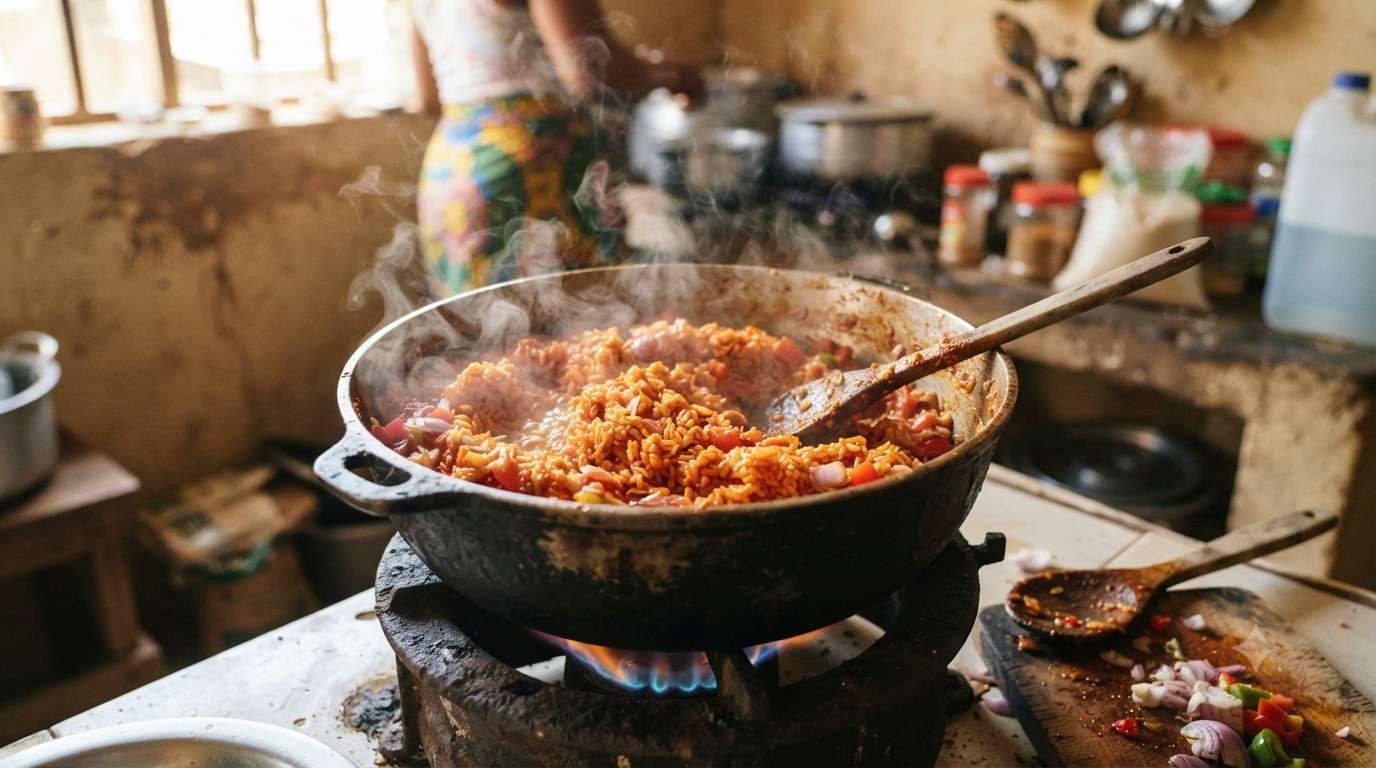
Jollof rice is one of West Africa's most beloved dishes. Known for its vibrant color, rich tomato-based sauce, aromatic spices, and satisfying texture, it has become a staple at family gatherings, celebrations, parties, and everyday meals.
But among the many ways to prepare jollof rice, smoky jollof rice has a particularly special appeal.
That characteristic smoky flavor gives the rice an almost grilled, roasted quality. It adds another layer of depth to the tomato, pepper, onion, and spice base, turning an already flavorful dish into something memorable.
The good news is that you don't need a special outdoor cooking setup to make delicious smoky jollof rice. With the right ingredients, cooking technique, and a little patience, you can create that deep, smoky character in your own kitchen.
What Is Jollof Rice?
Jollof rice is a one-pot rice dish popular across several West African countries.
Although recipes vary from country to country and even from household to household, the basic concept involves cooking rice in a flavorful tomato and pepper sauce.
Common ingredients include:
- Long-grain rice
- Tomatoes
- Red bell peppers
- Scotch bonnet or other hot peppers
- Onions
- Tomato paste
- Cooking oil
- Stock or broth
- Garlic
- Ginger
- Thyme
- Curry powder
- Bay leaves
- Salt
- Black or white pepper
Depending on the recipe, chicken, beef, fish, vegetables, or other proteins may be served alongside the rice.
Jollof is particularly popular at celebrations, where large pots are prepared to feed groups of people.
What Makes Jollof Rice Smoky?
The defining characteristic of smoky jollof rice is, naturally, its smoky flavor.
Traditional cooks may achieve this by allowing the bottom layer of rice to develop a slightly toasted crust while cooking.
This requires careful control.
The goal is to develop a pleasant roasted aroma without burning the entire pot.
The smoky flavor can also come from ingredients and cooking techniques that encourage caramelization and roasting.
Some cooks roast their peppers and tomatoes before blending them. Others use a cooking method that allows the rice at the bottom of the pot to toast slightly toward the end.
The best smoky jollof balances several flavors:
Tomato + pepper + onion + spices + caramelization + gentle smokiness
The result should taste rich and savory rather than simply burnt.
Ingredients You Will Need
Before beginning, gather all your ingredients.
For the Rice
- 3 cups long-grain rice
- 4–5 large tomatoes
- 2–3 red bell peppers
- 1–2 Scotch bonnet peppers, depending on heat preference
- 2–3 medium onions
- 3–4 tablespoons tomato paste
- ½ cup cooking oil
- 3–4 cups chicken or vegetable stock
- 2–3 cloves garlic
- A small piece of fresh ginger
- 1 teaspoon thyme
- 1 teaspoon curry powder
- 1–2 bay leaves
- Black or white pepper
- Salt to taste
Optional Additions
- Chicken
- Beef
- Smoked paprika
- Butter
- Mixed vegetables
- Green peas
- Carrots
- Green beans
The exact quantities can be adjusted according to how many people you are serving and your preferred flavor profile.
Step 1: Wash the Rice
Start by rinsing the rice thoroughly.
Place the rice in a bowl and rinse it several times with clean water until the water becomes considerably clearer.
This removes excess surface starch.
You don't necessarily need perfectly clear water, but reducing the excess starch helps prevent the finished rice from becoming overly sticky.
Set the washed rice aside.
Step 2: Prepare the Pepper and Tomato Base
The pepper and tomato mixture forms the heart of jollof rice.
Blend together:
- Tomatoes
- Red bell peppers
- Scotch bonnet peppers
- Some onion
- Garlic
- Ginger
Blend until relatively smooth.
The mixture should be thick enough to create a rich sauce rather than watery.
At this point, you can choose between two approaches.
Traditional Approach
Use the blended mixture directly and cook it down thoroughly.
Extra Smoky Approach
Roast some of the tomatoes, peppers, and onions before blending.
Roasting encourages caramelization and gives the sauce a deeper, more complex flavor.
This is particularly useful if you are cooking indoors and want additional roasted notes.
Step 3: Cook Down the Pepper Mixture
This step is extremely important.
Pour the blended mixture into a large pot and allow it to cook over medium heat.
The goal is to reduce the water content and concentrate the flavors.
Stir occasionally.
As the mixture cooks, its color should become deeper and its texture thicker.
This can take some time, so don't rush it.
A watery pepper base can lead to watery jollof rice, while a properly reduced base creates a much richer final dish.
Step 4: Fry the Tomato Paste
In a separate large pot, heat the cooking oil.
Add finely chopped onions and cook until softened.
Add the tomato paste.
Stir continuously or frequently while allowing the tomato paste to fry.
This helps develop a deeper flavor and removes some of the raw tomato taste.
The tomato paste should become darker and more aromatic without being allowed to burn.
This is one of the small steps that can make a major difference to the final flavor.
Step 5: Combine the Sauce
Add your reduced pepper and tomato mixture to the fried tomato paste.
Stir thoroughly.
Now add your seasonings.
You can use:
- Thyme
- Curry powder
- Bay leaves
- Black pepper
- Salt
- Stock cubes or seasoning powder, if desired
Allow the sauce to simmer.
Taste it before adding the rice.
This is an important moment because the sauce should already taste flavorful.
Remember that the rice will absorb much of this seasoning.
Step 6: Add the Stock
Pour in your chicken or vegetable stock.
The stock provides both moisture and flavor.
If you're making chicken jollof, using homemade chicken stock can give the rice an especially rich taste.
Stir everything together and allow the sauce to come back to a gentle simmer.
Step 7: Add the Rice
Add the washed rice to the pot.
Stir carefully so that the rice is evenly coated with the tomato and pepper sauce.
The rice should be surrounded by enough liquid to cook properly, but avoid adding excessive water.
Cover the pot tightly.
A tight-fitting lid is particularly important because jollof rice benefits from cooking in trapped steam.
Step 8: Cook Slowly
Reduce the heat.
Allow the rice to cook slowly.
Avoid constantly opening the lid.
Every time you remove the lid, steam escapes, and steam is an important part of cooking the rice evenly.
Instead, let the rice cook undisturbed for a while before checking it.
If necessary, add a small amount of stock or water.
The objective is to cook the rice until tender while allowing it to absorb the sauce completely.
The Secret to Smoky Jollof Rice
Now comes the part that gives smoky jollof its signature character.
Once the rice is nearly cooked, reduce the heat and allow the bottom of the pot to develop a light toasted layer.
This requires attention.
You want the bottom to become slightly caramelized and smoky—not completely burnt.
Keep the pot covered and listen carefully.
You may begin to notice a roasted aroma developing.
This is sometimes referred to as the "party jollof" effect because large-batch jollof cooked over strong heat can naturally develop smoky notes.
However, there is an important distinction:
Smoky does not mean burnt.
A little caramelization can add complexity.
Too much burning can make the entire pot bitter.
How to Get Smoky Flavor Without Burning the Rice
If you're nervous about burning the rice, there are several ways to increase smoky flavor more safely.
Roast the Vegetables
Roast tomatoes, peppers, and onions before blending them.
This creates natural roasted flavors that carry into the final sauce.
Use Smoked Paprika
A small amount of smoked paprika can provide a noticeable smoky character.
Don't use too much, however. The goal is to complement the traditional flavors rather than overpower them.
Allow Controlled Toasting
Near the end of cooking, slightly increase the heat for a short period while keeping a close eye on the pot.
This can help create the characteristic toasted layer.
The key word is controlled.
Don't Stir Too Much
One of the most common mistakes when making jollof rice is excessive stirring.
Stirring too frequently can break the rice grains and release additional starch.
It can also prevent the bottom from developing the slightly toasted flavor associated with smoky jollof.
Instead, stir gently when necessary.
If the rice appears to be sticking excessively, check the heat and moisture level before aggressively stirring the pot.
How to Know When the Jollof Is Ready
Your jollof rice is ready when:
- The rice grains are tender.
- Most of the liquid has been absorbed.
- The grains remain relatively separate.
- The tomato sauce has coated the rice.
- The aroma is rich and savory.
- The bottom has developed a subtle roasted character.
Taste a few grains before turning off the heat.
If the rice is still firm in the center, add a small amount of liquid, cover the pot, and continue cooking over low heat.
Let the Rice Rest
Once the rice is cooked, turn off the heat.
Keep the pot covered and allow it to rest for several minutes.
This gives the remaining steam time to distribute throughout the pot.
After resting, gently fluff the rice with a fork or wooden spoon.
Avoid aggressively mixing it.
The goal is to keep the grains intact.
What to Serve With Smoky Jollof Rice
Jollof rice is incredibly versatile and can be served with many different sides.
Fried Plantains
Sweet fried plantains are one of the most popular accompaniments.
Their sweetness contrasts beautifully with the savory and spicy rice.
The combination of smoky rice and caramelized plantain is especially satisfying.
Grilled or Fried Chicken
Chicken is another classic pairing.
Grilled chicken works particularly well because the charred exterior complements the smoky character of the rice.
You can season the chicken with herbs, spices, garlic, ginger, and pepper before grilling or roasting it.
Salad
A simple fresh salad can provide contrast.
Crisp lettuce, cucumber, tomatoes, onions, and other vegetables help balance the richness of the rice.
Fried or Grilled Fish
Fish is another excellent protein option.
A well-seasoned grilled fish can add another layer of smoky flavor without making the meal overly heavy.
Making Party-Style Smoky Jollof Rice
Party jollof has developed a reputation for having an especially distinctive smoky flavor.
Large quantities are often cooked for celebrations and gatherings.
When cooking large batches, several factors can contribute to the flavor:
- High cooking temperatures
- Large heavy pots
- Long cooking times
- Caramelization of the sauce
- Slight toasting at the bottom
- Outdoor or charcoal cooking in some traditional settings
The combination creates a flavor that many people associate with celebrations.
However, you can recreate some of these characteristics at home without needing to cook an enormous batch.
The key is to focus on deeply cooked sauce, roasted ingredients, controlled heat, and careful finishing.
Common Mistakes to Avoid
1. Using Too Much Water
Too much liquid can produce soft, mushy rice.
Add liquid carefully and remember that the tomato and pepper mixture already contains water.
2. Not Cooking the Tomato Base Enough
A poorly cooked tomato base can taste acidic or raw.
Allow the sauce enough time to reduce and develop flavor.
3. Cooking on Excessively High Heat
High heat can burn the bottom before the rice is fully cooked.
Use controlled heat and adjust it as the rice cooks.
4. Stirring Constantly
Too much stirring can damage the rice grains and make the dish sticky.
Stir only when necessary.
5. Adding Too Much Spice
Jollof should be flavorful, but adding excessive amounts of individual spices can overwhelm the tomato and pepper base.
Build the flavor gradually.
6. Making It Too Smoky
Smokiness should complement the dish.
If the entire pot tastes bitter or burnt, you've gone too far.
The ideal smoky jollof has a subtle roasted aroma rather than the taste of charred food.
How to Make Jollof Rice Less Spicy
Not everyone enjoys intense heat.
If you're cooking for a family or group with different preferences, reduce the amount of Scotch bonnet or other hot peppers.
You can maintain the pepper flavor by using more sweet red bell peppers while reducing the hot peppers.
You can also serve additional spicy sauce separately.
This makes it easier for each person to customize their meal.
How to Make Smoky Jollof Rice Vegetarian
Jollof rice doesn't have to contain meat.
For a vegetarian version, replace chicken stock with vegetable stock.
You can add vegetables such as:
- Carrots
- Peas
- Green beans
- Bell peppers
- Sweet corn
You can also serve the rice with grilled vegetables, fried plantains, beans, or a fresh salad.
The tomato and pepper base provides enough flavor to make the dish satisfying even without meat.
Can You Make Jollof Rice Ahead of Time?
Yes.
Jollof rice can be prepared ahead of a gathering, which is one reason it works so well for parties and celebrations.
If preparing it ahead, allow the rice to cool appropriately and store it safely.
When reheating, add a small amount of water or stock if necessary and heat gently.
Avoid repeatedly reheating the entire batch.
For the best texture, reheat only the amount you plan to serve.
Why Jollof Rice Is So Popular
Jollof rice succeeds because it combines several qualities in one dish.
It is:
- Flavorful
- Filling
- Affordable
- Adaptable
- Easy to serve to groups
- Suitable for celebrations
- Easy to customize
It can be a simple home-cooked meal or the centerpiece of a large celebration.
The basic ingredients are relatively straightforward, but small differences in preparation can produce dramatically different results.
That's part of the fun.
The Cultural Importance of Jollof Rice
Jollof rice isn't simply another rice recipe.
Across West Africa, it is deeply connected to social gatherings and food culture.
Large pots of jollof are common at parties, weddings, birthdays, family celebrations, and other gatherings.
It is also at the center of a famous culinary rivalry between countries, particularly Nigeria and Ghana.
People passionately debate which country's jollof is better, with differences in rice, seasoning, cooking techniques, and preparation all contributing to the discussion.
But beyond the rivalry, the popularity of jollof demonstrates how food can create a sense of identity and community.
Nigerian Jollof vs. Ghanaian Jollof
The differences between Nigerian and Ghanaian jollof can involve the type of rice, seasoning, cooking technique, and preferred accompaniments.
Nigerian-style jollof is often associated with a deeply seasoned tomato-pepper base and can develop a pronounced smoky character, particularly in party-style preparations.
Ghanaian jollof can feature its own distinctive seasoning and preparation traditions.
There are also countless household recipes that don't fit neatly into either category.
Rather than searching for one "correct" jollof recipe, it is more useful to appreciate the variety.
Every cook brings their own interpretation.
A Simple Formula for Great Smoky Jollof
If you want to remember the entire process without memorizing a complicated recipe, think of smoky jollof in five stages:
1. Build the Base
Blend tomatoes, peppers, onions, garlic, and ginger.
2. Develop the Flavor
Cook the mixture down and fry the tomato paste.
3. Season Properly
Add stock, herbs, spices, and salt.
4. Cook the Rice Slowly
Add washed rice, cover tightly, and cook over controlled heat.
5. Finish With Smoke
Allow a controlled toasted layer to develop or use roasted ingredients for additional smoky depth.
This simple framework gives you a strong foundation for experimenting with your own version.
Final Thoughts
Smoky jollof rice is a dish where technique matters just as much as ingredients.
The tomato and pepper base provides the foundation. Properly cooked onions and tomato paste add depth. Stock brings richness, while herbs and spices create aroma.
Then comes the most important finishing touch: controlled heat and caramelization that produce the characteristic smoky flavor.
The best jollof isn't simply spicy or intensely tomato-flavored. It should have layers of taste—savory, slightly sweet, aromatic, rich, and gently smoky.
Serve it with fried plantains, grilled chicken, fish, salad, or your favorite side, and you have a meal that works equally well for a quiet family dinner or a lively celebration.
Ultimately, smoky jollof rice is more than a recipe.
It is a reminder of how simple ingredients can become something extraordinary when they're cooked with patience, technique, and care.